Low-Pressure Cleaning That Protects Delicate Finishes
Soft Washing Services in Timpson for wood siding, composite decking, and exterior finishes where high pressure causes damage
Rural East Texas properties are heavily represented by wood siding construction, composite decking, and older exterior finishes that standard high-pressure washing equipment damages on contact. These surfaces accumulate algae, mold, and dirt in the same way any exterior does, but the cleaning method has to account for what the substrate can tolerate—and high pressure is the wrong tool for most of them. Twisted Pines Outdoor Solutions is a family-owned business based in Timpson that is launching soft washing services within six weeks, with custom-built equipment designed specifically for low-pressure delivery on these surface types.
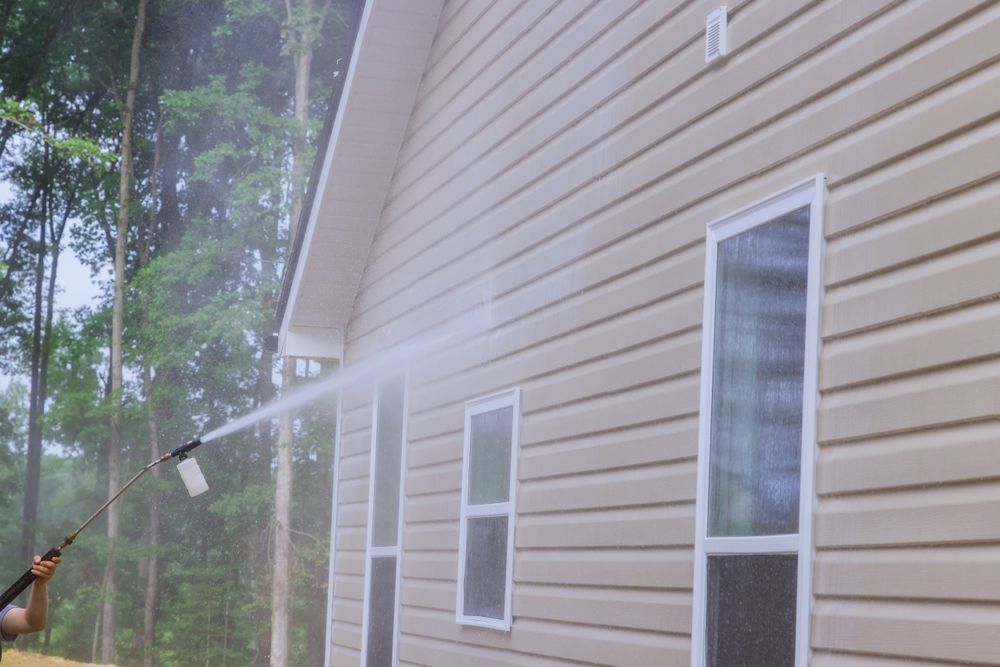
Soft washing applies specialized cleaning solutions at low pressure, allowing the chemistry to do the work that high-pressure water would otherwise accomplish through force. The crew applies the solution and allows it adequate dwell time to break down algae, mold, and organic buildup at the surface level, then rinses gently—a sequencing step that matters because rinsing before the solution has worked simply spreads the contamination rather than removing it. This approach is what protects older wood from fiber damage, keeps composite decking materials from pitting or discoloring, and prevents vinyl from warping or separating at seams. The business will carry full insurance before the service launches.
Arrange a pre-launch estimate for your property so scope and surface conditions are documented before your first service date.
Why Dwell Time and Solution Type Define the Result
The difference between soft washing done correctly and soft washing done quickly is dwell time—the period between solution application and rinse. Cleaning solutions formulated for algae and mold removal work through a chemical process that requires contact time with the organic material; cutting that time short to move faster through a property leaves live biological growth behind, which refouls the surface in weeks rather than months. Twisted Pines built its equipment specifically for this method rather than modifying pressure washing tools, which reflects a different approach to how solution is delivered and held at the surface.
Once the process is completed correctly, the change is visible and lasting: wood siding that had developed a dark green or black cast from algae returns to its original painted color, composite decking loses the slick biofilm that makes it a slip hazard, and vinyl surfaces shed the streaking that collects in panel channels and around trim. The organic material is not just rinsed off the face of the surface—the cleaning solution addresses it at a biological level, which extends the interval before regrowth becomes visible again.
Properties with mixed exterior surfaces—wood trim against vinyl panels, for example, or composite decking adjacent to painted masonry—require the crew to assess each section independently rather than applying a single setting across the whole job. The approach and solution concentration may vary by material even within a single property visit.
Questions About How Soft Washing Is Performed
The following questions focus on the soft washing process itself and how surface conditions, construction type, and material age affect what the work involves.
How does soft washing differ from standard pressure washing in terms of what it actually does to a surface?
Soft washing relies on cleaning solution chemistry rather than water force—the solution breaks down algae, mold, and biological contamination at a molecular level, and the low-pressure rinse removes the residue without abrading or stressing the surface material.
What cleaning solutions are used and why do they matter for delicate materials?
Solutions are formulated to target specific biological growth types—algae, mold, and mildew each respond to different active ingredients—and the concentration is adjusted based on how heavy the buildup is and how sensitive the substrate is to chemical contact.
How does the age of wood siding or composite decking affect the soft washing process?
Older wood that has lost surface sealing or older composite that has developed micro-porosity from UV exposure absorbs solution differently than newer materials, which means dwell time and rinse pressure both need to be adjusted to avoid over-saturation or residue retention.
What does a properly soft-washed surface look like when the work is finished?
Siding returns to a consistent base color without dark streaking or green-gray patches, deck surfaces show their original texture and color without the slick organic film, and trim and panel channels are clear of the biological accumulation that typically collects there.
Why does soft washing produce longer-lasting results than rinsing with a garden hose or low-pressure sprayer?
A garden hose removes loose surface material but does not address the biological growth embedded in the surface; soft washing solutions kill the organism at the source, which slows regrowth significantly compared to surface-only rinsing.
Twisted Pines Outdoor Solutions is accepting soft washing inquiries now for Timpson properties, and estimates can be prepared before the service officially launches. Twisted Pines Outdoor Solutions also provides
soft washing services in Shelbyville, San Augustine, and Center.