Plant Selection Rooted in What Actually Grows
Landscape design in Timpson for properties where sun exposure, shade patterns, and site conditions determine what survives long-term
East Texas properties commonly combine full-sun exposures on open lawns with deep shade under mature canopy, and that variation within a single yard is where generic plant lists fail. A shrub selected for color or shape that isn't matched to the actual sun hours at its planting location typically declines within two growing seasons—which means the investment in installation is partially lost and the design doesn't hold. Twisted Pines Outdoor Solutions approaches landscape design in Timpson by starting with site-specific conditions before selecting any plant material, so what gets installed is what will actually establish and grow in that location.
The designer meets on-site or by phone to work through your vision—including reference photos, color preferences, and how you want the space to function. After that conversation, she researches plant options that match your aesthetic intent while fitting the sun exposure, spacing, and soil type of the actual site. If a species you prefer won't perform in your conditions, she presents alternatives that create the same visual effect with better survival rates rather than simply approving what you asked for and moving on. The design integrates directly with shrub installation and mulching so the plan is buildable, not theoretical.
Arrange a design consultation to walk through your site conditions and start identifying plant options that fit both your goals and your property.
Why Site-Specific Research Produces Different Results
The distinguishing step in Twisted Pines' design process is the research stage between gathering your preferences and presenting recommendations. Rather than pulling from a standard plant palette, the designer cross-references your stated preferences against the sun exposure, existing soil, and spacing available at your specific site. That step is where substitutions get made—where a preferred plant that won't thrive in partial shade gets replaced with a species that provides the same structural form and similar color but survives the actual conditions it will face.
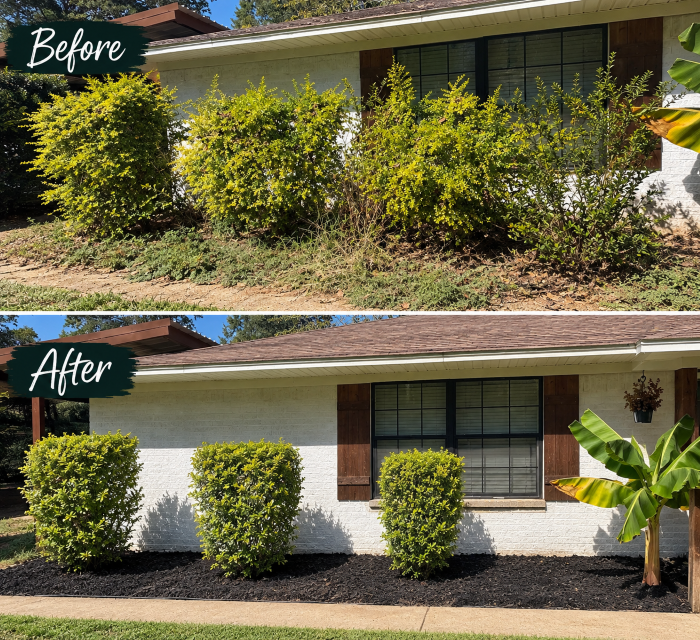
Once installation is complete, what you observe is a planting scheme that holds its intended shape and density rather than thinning out where plants were mismatched to conditions. Beds with species selected for the actual light levels at each position fill in more evenly, and plants establish more reliably in their first season because the selection accounted for site-specific variables before anything went in the ground. That consistency is visible within the first growing season and becomes more apparent as plants mature.
Design at Twisted Pines Outdoor Solutions connects directly to installation—shrub planting, mulch application, and bed preparation are handled by the same operation, which means the designer's plant placement decisions translate into how the crew actually sets each plant during installation. That continuity between design and build eliminates the translation errors that occur when a plan is handed from one contractor to another without shared context about the reasoning behind placement choices.
Common Questions About the Design Process
These questions address how landscape design consultations work and what drives plant selection decisions for properties with the mixed sun, shade, and site variability typical of this region.
What information should you bring to a design consultation?
Reference photos, a general sense of your color preferences, and any specific plants you know you want or want to avoid give the designer a starting framework—you don't need a finalized plan, because the consultation is where those ideas get refined against your actual site.
How does sun and shade mapping affect plant selection?
The designer evaluates how many direct sun hours each planting area receives across the day, because many ornamental plants that perform well in full sun decline in partial shade even if they appear similar at the nursery—matching species to actual light conditions is the first filter in plant selection.
What happens when a preferred plant won't grow in your conditions?
The designer presents alternatives that achieve the same visual effect—similar form, flower color, or seasonal interest—using species with documented performance in comparable site conditions, rather than approving the original selection and allowing the client to discover the problem after installation.
How does the design phase connect to the installation work?
Twisted Pines handles both design and installation in-house, so the plant placement decisions made during design are communicated directly to the installation crew, preserving the reasoning behind spacing and positioning rather than relying on a plan drawn without knowledge of how the crew will execute it.
What does the design include versus what is handled separately?
The design covers plant selection, placement, and integration with bed layout and mulching; irrigation design and installation are handled by separate licensed contractors as Twisted Pines does not hold an irrigation license.
Twisted Pines Outdoor Solutions also provides landscape design in Shelbyville, San Augustine, and Center. To start a design consultation for your property, call Twisted Pines Outdoor Solutions at (903) 690-2197 and describe your site and what you're hoping to create.