
Beds and Plantings Built to Establish Correctly
Landscape installation in Timpson for properties requiring shrub planting, mulching, sod, and site preparation done as a complete scope
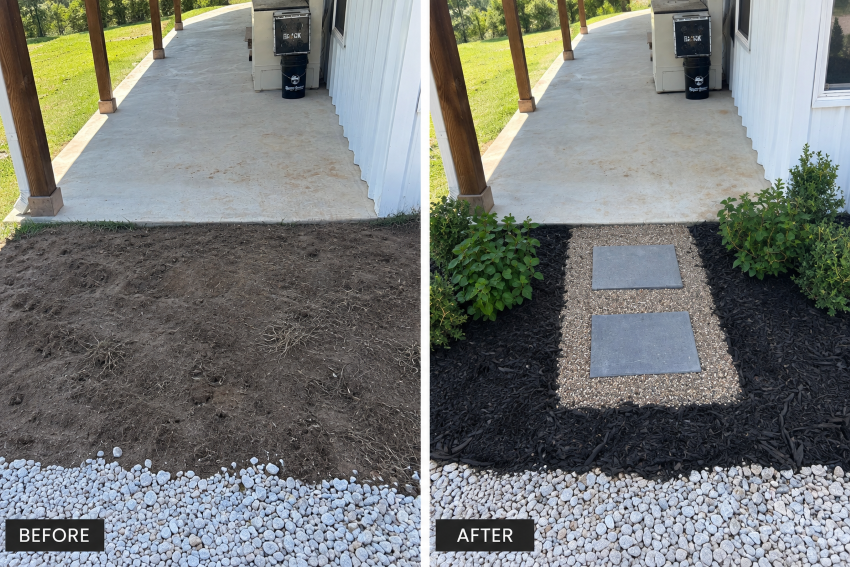
A completed landscape installation has visual indicators that separate quality work from rushed execution: shrubs sitting at the right grade rather than planted too deep or too shallow, mulch at the depth that actually suppresses weed competition rather than a decorative layer, and sod laid with tight seams that knit together rather than gapping and drying at the edges. Twisted Pines Outdoor Solutions produces those results on landscape installations in Timpson because each step in the sequence—site prep, bed layout, planting, mulching—is handled by the same crew working a planned sequence rather than improvised on site. Free estimates are available for all projects, confirmed in person.
Installation begins with site planning and layout based on your design or direct customer direction. The crew prepares beds, sets shrubs at the correct depth with proper backfill to eliminate air pockets around the root zone, applies mulch at the depth needed to retain moisture and reduce weed competition, and handles sod installation where turf establishment is part of the scope. Pricing covers planning, all plant material, mulch, and labor. Irrigation is not included—Twisted Pines is not licensed for that work, and irrigation installation is scoped separately with a licensed contractor if needed.
Request a free in-person estimate to review your site layout and confirm the full scope of the installation before any work begins.
What Proper Landscape Installation Actually Requires
Planting depth is one of the most consequential decisions made during shrub installation, and one of the most commonly ignored. Shrubs planted too deep develop crown rot over time as moisture accumulates at the stem base; shrubs planted too shallow expose root flare to drying conditions and produce unstable plants that shift in heavy rain. The Twisted Pines crew sets each plant to the grade it was grown at in the container, adjusting the bed surface rather than forcing the plant to adapt to an incorrect depth. Backfill is applied in stages to prevent air pockets, which collapse after the first wet period and leave the plant at a different depth than it was set.
After installation, the beds reflect the layout in a way that is immediately functional—mulch is consistent in depth across the bed surface, shrubs are stable and properly positioned, and sod seams are laid to minimize gap exposure at the edges. Properties in areas like Logansport and Kennard with larger or irregularly shaped lots are scoped specifically based on the actual bed dimensions and planting quantities confirmed during the estimate visit, so the plan matches the site rather than a standardized template.
The estimate visit covers material quantities, plant placement, bed dimensions, and the labor sequence so there are no scope gaps discovered mid-installation. Because Twisted Pines operates as a family-owned business built on the systems developed over a 35-year landscape operation, the estimate process reflects how high-volume installation crews scope work accurately rather than working from rough approximations that shift after the project starts.
Answers About How Installation Work Gets Done
These questions address what
landscape installation involves at each stage, from site preparation through final mulching, and what decisions affect how the crew sequences the work on your property.
What does bed preparation involve before planting begins?
The crew defines and excavates bed edges, removes existing vegetation competing with the planting plan, and grades the bed surface to the depth that allows shrubs to be set at the correct grade—preparation done before any plants arrive on site rather than worked around existing obstructions.
How is mulch depth determined during installation?
Mulch is applied at a depth that suppresses weed germination while allowing moisture to reach the root zone—typically two to four inches depending on the bed surface and plant spacing—and kept away from direct contact with shrub stems to prevent moisture accumulation at the crown.
Why does planting sequence matter for a multi-bed installation?
Larger background shrubs are set first so foreground plantings can be positioned relative to their eventual mature size and spread rather than placed at spacing that works for current pot size but creates overcrowding within two growing seasons.
What is included in the installation price and what is not?
Twisted Pines' installation pricing covers site preparation, all plant material, mulch, and labor; irrigation design and installation require a separately licensed contractor and are not part of the scope Twisted Pines provides.
How does sod installation differ from shrub and bed work in sequencing?
Sod is typically installed after bed edges are established so turf runs to a defined edge rather than being cut later, and the seams are laid to minimize exposed gaps that dry before the sod roots—the sequence matters for how well the sod establishes in the first two weeks.
Twisted Pines Outdoor Solutions also provides
landscape installation in Shelbyville, San Augustine, and Center. To confirm your project scope and material quantities, schedule a free in-person estimate with Twisted Pines Outdoor Solutions by calling (903) 690-2197 .