
Turf Programs Built Around What the Soil Actually Needs
Lawn Fertilization Services in Timpson for thin, discolored, or nutrient-depleted turf on rural and residential properties
What shifts when a licensed fertilization program is maintained consistently is visible in the turf itself: color deepens, density increases, and the thin or patchy areas that develop on neglected rural lawns begin filling in over successive treatment cycles. Twisted Pines Outdoor Solutions produces that result through licensed fertilization applications included as a standard component of lawn maintenance and mowing packages in Timpson—no separate scheduling, no additional coordination, and no gaps in timing that leave turf without nutrients during the periods when they matter most. The business is family-owned, holds a fertilization license, and is operated by someone who managed fertilization programs across a 9,000-customer landscape operation for 35 years before selling that business in 2025.
Applications are formulated and timed to the site's actual turf and soil conditions rather than applied on a fixed calendar regardless of what the lawn is showing. East Texas soils vary in their nutrient-holding capacity depending on organic matter content, drainage characteristics, and how consistently the property has been managed—an irregularly maintained rural lawn carries very different nutrient deficits than a property on a continuous program, and the fertilization approach has to reflect that difference to produce results. Because treatment is folded into the regular maintenance cycle, timing stays aligned with active turf growth periods when uptake is most efficient.
Request a property consultation to review your turf condition and establish a fertilization schedule matched to your lawn's current state.
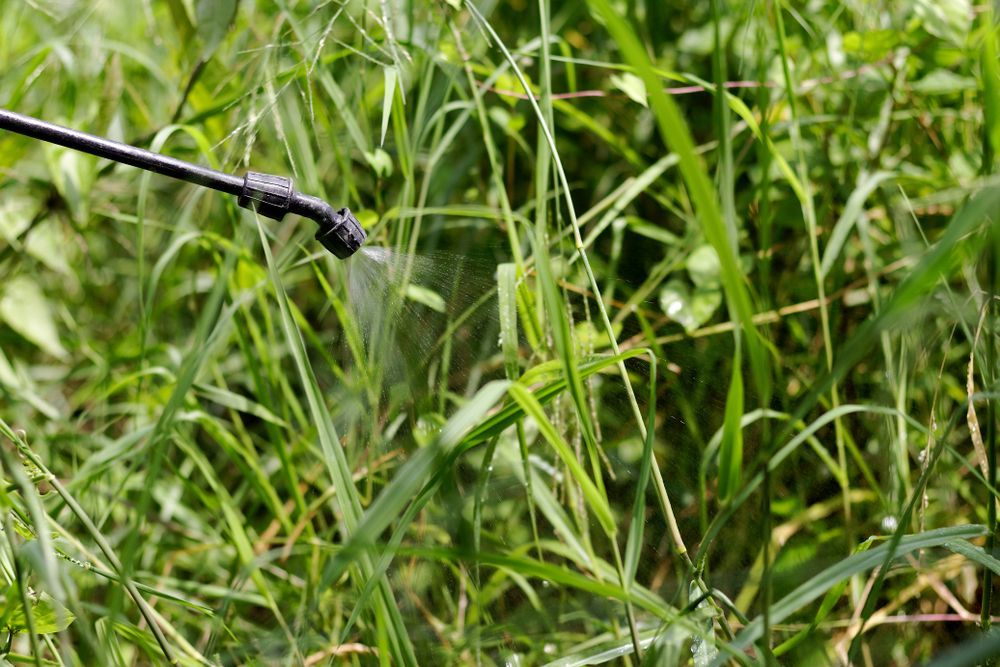
What Proper Fertilization Requires to Produce Visible Turf Improvement
Fertilization licensing is required at the commercial level because product selection, application rates, and nutrient ratios have direct consequences for turf health when misapplied—too much nitrogen at the wrong growth stage can burn turf and stress root systems, while under-application produces no measurable improvement and leaves deficiencies in place. A licensed applicator evaluates the current condition of the turf—color, density, visible stress indicators—and selects product formulations and application rates that address what is actually deficient rather than applying a generic mix on a standard schedule. Twisted Pines holds the license required to apply commercial-grade fertilization products that are not available to unlicensed applicators.
Once a proper fertilization program is underway, the changes in the turf are progressive and accumulate across treatment cycles: grass color shifts from pale or yellowish to a deeper, more consistent green, turf density increases as healthier root systems support fuller blade coverage, and the thin or bare patches that develop on neglected properties begin closing in as the surrounding turf strengthens. These are not changes that happen after a single application—they reflect what consistent, correctly timed nutrition does to the root and blade system over a full growing season.
Because fertilization is included in the mowing and maintenance package rather than sold separately, the timing of each application is always coordinated with what the turf is actually doing at that visit—which is the most practical way to avoid the common problem of applications made too early or too late in the growth cycle to be effectively absorbed.
What Property Owners Ask About Fertilization Work
The questions below address how licensed fertilization is applied, why timing and formulation decisions matter, and what changes become visible as a program progresses across a growing season.
How is fertilizer formulation selected for a specific lawn rather than applied generically?
The applicator evaluates current turf color, density, and visible stress patterns to identify whether deficiencies are primarily nitrogen-driven, or whether phosphorus and potassium ratios also need adjustment—different deficits require different product mixes to address effectively.
Why does including fertilization in the mowing cycle improve the outcome compared to scheduling it separately?
Turf absorbs nutrients most efficiently during active growth stages, and mowing visits are already timed to those periods; separate fertilization appointments frequently land outside optimal timing windows, reducing uptake and extending the interval before results are visible.
What does a lawn with a proper fertilization program look like compared to one that has been inconsistently treated?
Consistently fertilized turf maintains even color across the full lawn area, fills in bare patches progressively, and shows resilience in density during dry stretches—inconsistently treated lawns typically show uneven green, pale or yellow zones, and thin areas that widen over time.
How does the condition of a rural Timpson-area property affect where fertilization should be prioritized?
Large rural properties often have zones with significantly different turf density and color—shaded areas near tree lines, high-traffic lanes, and drainage paths all carry different nutrient and growth conditions, and those zones benefit from attention as distinct areas rather than uniform treatment.
What maintenance step should follow a fertilization application to support uptake?
Adequate soil moisture after application helps move nutrients into the root zone; on properties with irrigation, coordinating the run schedule with application timing is straightforward, while non-irrigated properties benefit from applications timed close to expected rainfall based on current conditions.
Twisted Pines Outdoor Solutions structures fertilization into ongoing
maintenance packages, so properties in Timpson receive licensed applications on a cycle matched to their turf conditions from the first visit forward. Twisted Pines Outdoor Solutions also provides lawn fertilization services in Shelbyville, San Augustine, and Center.